Odisha Chhattisgarh Tribal Tour
Duration: 12 days/ 11 Nights
Route: Bhubaneswar – Puri – Daringbadi – Muniguda – Semiliguda – Jagdalpur
Welcome to Odisha – Land of Ancient Culture and Natural Beauty
Discover Odisha, a captivating state on India’s eastern coastline, where golden beaches meet the Bay of Bengal and sacred hills rise beyond the shore. Known for its rich tribal heritage, lush forests, ancient temples, and vibrant traditions, Odisha offers a journey through untouched landscapes and cultural depth.
Home to 62 indigenous tribes, including the Bondas and Kondhs, the region opens a rare window into age-old rituals, tribal art, dance forms like Gotipua, and mythology deeply rooted in tradition. From the sun-kissed beaches of Puri to the spiritual serenity of Konark and Lingaraj temples, every corner tells a story of devotion and heritage.
Whether you’re exploring Chilika Lake’s migratory birds, trekking through tribal heartlands, or witnessing colorful festivals, Odisha promises an immersive experience that blends nature, culture, and authenticity.
Day 1 : Arrive Bhubaneswar
Welcome to Bhubaneswar – The Temple city of India. Meet and greet on arrival at Biju Patnaik International airport and transfer to hotel.
Hotel check-in 14:00 hrs. / check-out at 12:00 hrs.
Being the seat of Tribhubaneswar or ‘Lord Lingaraj’, Bhubaneswar is an important Hindu pilgrimage centre. Hundreds of temples dot the landscape of the Old Town, which once boasted of more than 2000 temples. It is the temple city Bhubaneshwar that calls for attention, dotted as it is with temples — big, small, ancient and in clusters. Later proceed for a heritage trail of the ancient temples in the Old Town of Bhubaneswar explore the temple city, where you see incredible architecture and connect with the locals for an immersive experience on their local lifestyles. As you wander through its labyrinthine lanes, you’ll encounter magnificent temples adorned with intricate carvings, each a testament to the skilled craftsmanship of the past. Bhubaneswar’s Old town is a captivating journey through time, where the sacred Bindusagar Lake mirrors the skies and adds a tranquil touch to the surroundings.
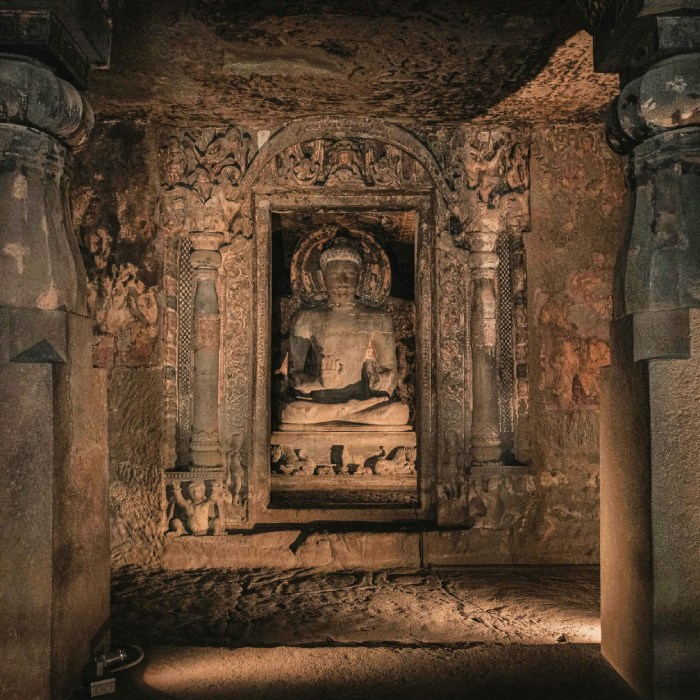
Also visit the ancient caves of Khandagiri and Udaygiri which were carved and tunneled, to create this multi-storied ancient apartment residence for Jain monks. They were the work of the first known Odishan ruler, King Kharavela, and probably begun in the first century BC. Kharavela was a king of the Mahameghavahana dynasty, who is known for expansion of the Kalinga empire and his installation of public improvements, such as canal systems. His queen was evidently quite a patron of the arts, and probably had much to do with the impressive sculptural decoration of the caves.
Overnight at Hotel-Bhubaneswar
Day 2 : Bhubaneswar
After breakfast proceed to visit the Chausathi Yogini temple at Hirapur with countryside walk.
Driving through the beautiful scenery of Bhubaneswar’s rural side, comes a beautiful and ancient temple- Chausathi Yogini. The temple mesmerizes us with its intricate sculptures and carvings. What will catch your attention more is its cultural importance and historical significance.
Believed to have been built in the 9thcentury, Chausathi Yogini Temple is dedicated to the 64 manifestations of Goddess Shakti who symbolises female energy. Historians speculate that it was during the reign of the Bhaumakaras that Rani Hiradei commissioned the construction of a Tantrik Temple committed to the worship of 64 Yoginis.The cult of Yoginis was very powerful between the 9th and 12th centuries in India. Since the Tantrik movement was of primitive nature with its ideas on the efficacy of magical spells, rituals, sounds and gestures, it was conjectured that the practise had had its roots in the rural or tribal culture. The rationale, thus, is the location of the Yogini group of temples in India which mostly are in the heart of the Gondwana forests of Central India resided by diverse tribes.
Activity : Spend your day interaction and participation in the religious activity of the temple with the local priest . The aura of the temple premises, even today, does take one in a mysterious ride to the time when Tantrik practise was strong and intense along its walls.
Later proceed for the heritage trail of the ancient temples of Old Town in Bhubaneswar.
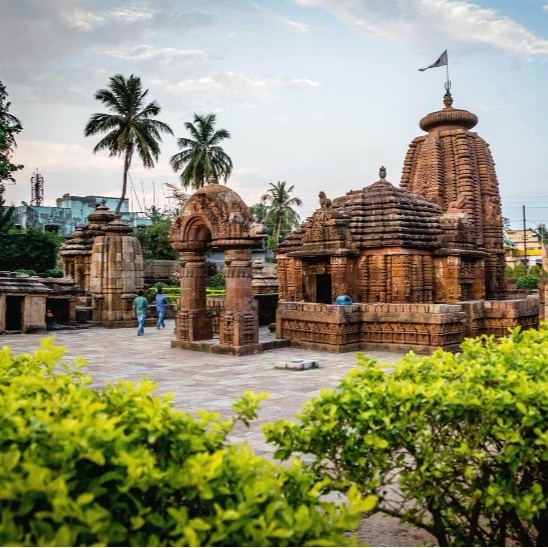
Among the finest of its 600 temples is the Lingaraj Temple of Shiva built in the 11th century, it is also the biggest in Bhubaneswar. The temple is dedicated to Lord Shiva, also known as ‘Lingaraj’. It is adorned with beautiful sculptures, which have been carved on the spire. Bindusagar Lake lying to the north of the Lingaraja Temple, is one of the popular tourist attractions of Bhubaneswar. Lingaraj Temple (Non Hindu are not allowed inside the temple. To be viewed from a platform outside) . Mukteshwar Temple, is one of the most prominent temples of Bhubaneswar and has been constructed in the style that is quite similar to the one used in the Kalinga School of Temple Architecture. Mukteshwar Temple belonging to the 10th -11th Century is one of the most prominent temples of Bhubaneswar. The 34ft high temple stands gracefully with an elegant torana(arch)in the front. In totality , the decorative designs present magnificent work of visual art . Parashurameswar Temple, built in 650 AD, is one of the oldest temples existing in Bhubaneshwar. The temple is profusely sculptured with amorous couples, animals and floral designs. It has a small but richly decorated shrine of Lord Shiva.
Afternoon visit the Tribal Museum.
The Tribal Museum located at the CRP Square in Bhubaneswar, was established in 1953. Today the museum is a major site of tourist interest as it gives an insight into the life of a tribal. On display are immaculate replicas of tribal huts of various tribal communities and artefacts collected from different tribal groups in Odisha. On display are the way of life of a tribal in the region which includes their attire, traditions, ornaments, food habits. The museum also displays replicas of Tribal dwellings and artifacts museum displays elements of anthropological interest and gives an insight on the different stages of evolution of tribal cultures.
Opening and Closing Time – 10.00 A.M. to 5:00 P.M.
Weekly Holidays: Closed on Mondays, National and State Government holidays. Photography restriction in the galleries.
Overnight at Hotel-Bhubaneswar
Day 3 : Bhubaneswar-Dhauli-Pipli -Puri – 65 kms / 1.5 hrs
After breakfast check-out from hotel and proceed to Puri en-route visit Dhauli Shanti Stupa, Pipli applique and Konark Sun Temple.
Dhauli
Dhauli-Ashoka (reign ca. 272-231 BC) was the most illustrious king of the Maurya dynasty. After hi s conquest of the kingdom of Kalinga in modern day Odisha, struck with remorse at the suffering he caused, Ashoka converted to Buddhism and spent the rest of his life propagating his dharma (law). In order to achieve this, he had numerous edicts inscribed on rocks, pillars and caves, throughout his vast empire. These are written in various vernaculars and represent the earliest written document from the Indic regions. From these edicts it would appear clear that Ashoka was an extremely tolerant and benevolent monarch. Near Dhauli, south of Bhubaneshwar, there is a rock inscribed with the edicts of the emperor Ashoka. The front of the rock is sculpted as the head, trunk and front legs of an elephant.The Shanti Stupa at Dhauli Hills is a significant symbol of love and peace. The pilgrimage is significant because here King Ashoka resigned from violent wars. After witnessing the devastating sight of blood filled land and the Daya River that obtained red color because of the merciless slaughter of around 1,50, 000 warriors, King Ashoka was filled with sheer grief and therefore decided to renounce wars completely all through the rest of his life. It is at Dhauli that Ashoka resorted to Buddhism and presented his sword in front of Lord Buddha.
Pipli
The famous town of Pipli in Odisha, halfway between Bhubaneswar and Puri, is known for its exquisite applique work. An enchanting form of fabric based patchwork, well known for its geometric motifs and stylized birds, animals and flowers cut out of brightly coloured cloth and sewn on contrasting backgrounds. The typical traditional motifs are varied yet fixed in their colours and representations. Motifs ranging from geometric, abstract, schematized actual life forms to stylized versions of social, natural, astral and mythological characters and objects. Closed on last Tuesday of every month.
Later in the day proceed to Puri and check-in to hotel. Most hotels in Puri have check-in/check-out at 08:00-08:30 hrs.
Puri, a coastal gem nestled on the Bay of Bengal, weaves together the threads of spirituality and serenity in a seamless tapestry. Home to the revered Jagannath Temple, this town. Nestled along the shimmering Bay of Bengal, Puri is a coastal haven that beautifully marries spirituality, scenic splendor, and cultural vibrancy. At its heart lies the revered Jagannath Temple, a timeless symbol of devotion and inclusivity
Explore the town of Puri.
Visit the Jagannath Temple at Puri which is one of the most sacred pilgrimage spots in India. This 12th century temple is dedicated to Lord Jagannath –“The Lord of the Universe”. The wooden figures of the three deities, Jagannath, Balabhadra and Subhadra stand in the sanctorum garlanded and decorated by the high priests. (Non-Hindus are not allowed inside the Jagannath temple and to be viewed from outside across the street. ). Wander away into the narrow lanes of the old Puri roads. Interact with the local temple priest and immerse yourself in the religious fervor of this holy city.
Overnight at Hotel-Puri
Day 4 : Puri-Konark-Puri – 70 kms / 1.5 hrs
After breakfast proceed for the visit of the magnificent Sun Temple, Konark local fishermen village and later in the day visit Raghurajpur heritage crafts village located near to Puri town.
Konark Sun Temple.
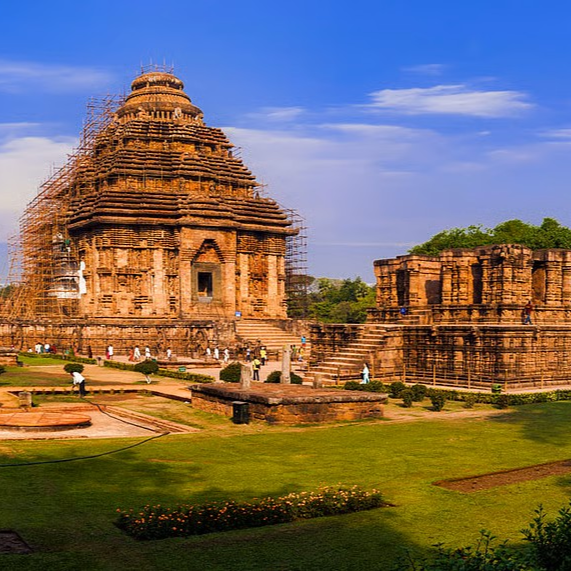
Konark is the site of one of the most spectacular examples of religious architecture in the world. The Sun Temple at Konark conceived as a massive chariot hauling the Sun God across the heavens by the might of seven splendidly carved horses, standing aloft on 24 chariot wheels-intricately carved – symbolizing the march of time, lies in solitary splendor surrounded by drifting sand three kilometers from the sea, but originally it was reported to be closer for which it was used as a navigational point by European sailors, who referred to it as the ‘Black Pagoda’. This 13th century architectural marvel is one of the most magnificent monuments of the World and also a UNESCO World Heritage site. Nobel Laureate & Poet Rabindranath Tagore said, ‘here the language of stone surpasses the language of man’. It is true that the experience of Konark is impossible to translate into words.
Also visit the local Fisherman’s village and interact with the local community
Afternoon visit Raghurajpur heritage crafts village by walking and experience the local artisans crafts village.
The big attraction at Raghurajpur and nearby villages is that the whole village community is involved in making some kind of handicraft. Many have even won national awards for their work. There are just over 100 households and 300 artisans in the village. The economic, social and cultural life of this village revolves around arts and crafts with at least one member from almost every family involved in the arts. There is an informal division of work in the family and every member is engaged in doing something or the o ther related to paintings. While the men folk and the boys work on the paintings, the women are busy preparing the canvas, boiling the gum or powdering the pigments in a mortar.You can wander around, check out the beautiful painted murals on the houses, chat to the friendly artisans and see them in action -! Pattachitra traditional cloth paintings are a specialty in the village, but the artisans make a wide variety of items including the palm leaf engravings, stone carvings, wood carvings, and wooden toys.
Interact with the Chitrakars as they demonstrate their craftsmanship.
Overnight at Hotel-Puri.
Day 5 : Puri-Chilika Lake-Daringbadi – 260 kms /5.5 hrs
After breakfast we drive to Daringbadi -en-route visit Chilika Lake-Manglajodi with a brief visit to the nearby Olasingh weaving village. Lake.
Lake Chilika
A vast lake along the eastern cost of Odisha with beautiful islands, migratory birds wading in the shallow waters and the air echoing with the chirping of birds from as far as the Caspian Sea, Aral Sea and other parts of Mongolia, Central and South-East Asia, that’s the breath-taking beauty of Chilika-Asia’s largest brackish water estuarine lake. Lake Chilika sprawls over an area of 1100 sq.km covering parts of three districts of Odisha i.e. Puri on the east, Khurdha on the North and Ganjam on the South. It’s a haven for bird-watchers / nature lovers. Abounding in unique flora and fauna, Chilika supports the livelihood of more than hundred thousand families living in and around it.
Winter (mid Nov-mid Feb) is the best time to visit Chilika as over hundred species of migratory birds flock the islands during this time of the year.
Manglajodi – Lake Chilika
A community owned and managed wildlife conservation venture, Mangalajodi Ecotourism is your destination to get a peep into Mother Nature. Mangalajodi is a village located on the northern banks of Chilika Lake in Odisha, ‘The Bird’s Paradise’ hosts more than 3,00,000 birds in its marshy waters, especially in winters. Mangalajodi also represents one of its kind ecosystems, whose protection is epitomized by a sustainable lifestyle that is at a brink of extinction in urban settings. Enjoy the walk into the marshy lands for a country boat ride with interaction – an hour with the local fishermen community. After enjoying a boat ride on the lake we drive to Daringbadi.
Later proceed to Daringbadi – The tribal heartland of Kutia Kondh tribe and check-in to hotel.
The Kondh ethnic group; they are one of the most ancient tribes, direct descendant of the pre-Aryan world, which still faithfully preserves the culture and traditions, and is totally dedicated to rituals and ceremonies. Mainly settled farmers, they cultivate rice and vegetable s, own numerous buffaloes from which they obtain milk and cheese, live in long, low houses built on the hills and arranged around a square dominated by a sacrificial altar.
Overnight at Hotel-Daringbadi
Day 6 : Daringbadi-Muniguda – 150 kms /3 hrs
After breakfast leave for Muniguda enroute visit of Baliguda , Barakkhamma village walking to the Dhokra craft community .
Explore the region of Daringbadi with visit to the local Kutia Kondh tribe community,
The Kandhamal is bestowed with the beauty of nature. It has wild life, scenic beauty, healthy climate, and serpentine ghat roads for the tourists. It has attractions, like panoramic coffee gardens, pine jungles, Ghat roads, hills and water falls, vir gin forest and typical tribal village life. Almost 66 percent of the land area of the District is covered with dense forests and towering mountains rich in green meadows at the attitude of 2000 feet to 3000 feet, the terraced valleys thronged with these colorful tribal in their natural heritage, dancing and sporting has its own appeal.
The Kondh ethnic group; they are one of the most ancient tribes, direct descendant of the pre-Aryan world, which still faithfully preserves the culture and traditions, and is totally dedicated to rituals and ceremonies. Mainly settled farmers, they cultivate rice and vegetable s, own numerous buffaloes from which they obtain milk and cheese, live in long, low houses built on the hills and arranged around a square dominated by a sacrificial altar.
The important festivals are at the time of sowing and harvesting. During festivals,feast is accompanied by singing,dancing and drinking.At the time of sowing seeds they worship Dharani Deota and make animal sacrifice to ensure good crop. The village women sing and dance joining hands and the boys standing around also sing and the entire atmosphere becomes joyous. During Sarupenu festival they resort to worship on the hills and enjoy the day with feasting and dancing. Their weapon is bow and arrow by which they defend themselves from wild animals. After visit continue to Muniguda. Late afternoon explore the nearby walking distance town of Muniguda.
Overnight at Hotel-Muniguda
Day 7 : Muniguda-Puttasingh-Muniguda – 210 kms /4.5 hrs
After breakfast we proceed for a day excursion visiting the primitive Lanjia Saora tribes, see their famous ( Saora -IDITAL indigenous painting) interaction with the villagers and the community head and explore their unique lifestyle and culture.
Gradually we cross over to the small village hamlets of the Saora tribes who also find mention in the epic Ramayana. The Saoras are adept in art, painting and crafts. They use trees, animals, tribal people and instances from their daily life as their motifs for the paintings. They have a distinctive shamanic culture wherein they believe in evil spirits and worship them apart from numerous other deities.
Visit the Saora tribes-Puttasingh ,typical rural farming villages of Odisha and interact with the villagers and explore their unique lifestyle.
Overnight at Hotel-Muniguda.
Day 8 : Muniguda-Chatikona-Semiliguda – 170 kms /4.5 hrs Must be a Wednesday
Breakfast. Departure for Chatikona where we will visit the market of the Dongria Kondh tribe characterized by animated exchanges and bargaining. The Dongria Kondh are a rather isolated and therefore aggressive ethnic group.
Mainly farmers have developed crops of pineapples, tubers, papayas, mangoes and bananas, which flourish luxuriantly near their villages. The houses of the Dongria are different from those of the other Kondh, they are low and with sloping thatched roofs. En-route also visit Minapai basket making local community village and pottery village at Kakirgumma with community interaction.
Overnight at Hotel-Semiliguda
Day 9 : Semiliguda-Onukadelli-Semiliguda – 185 kms /4.5 hrs -Must be a Thursday
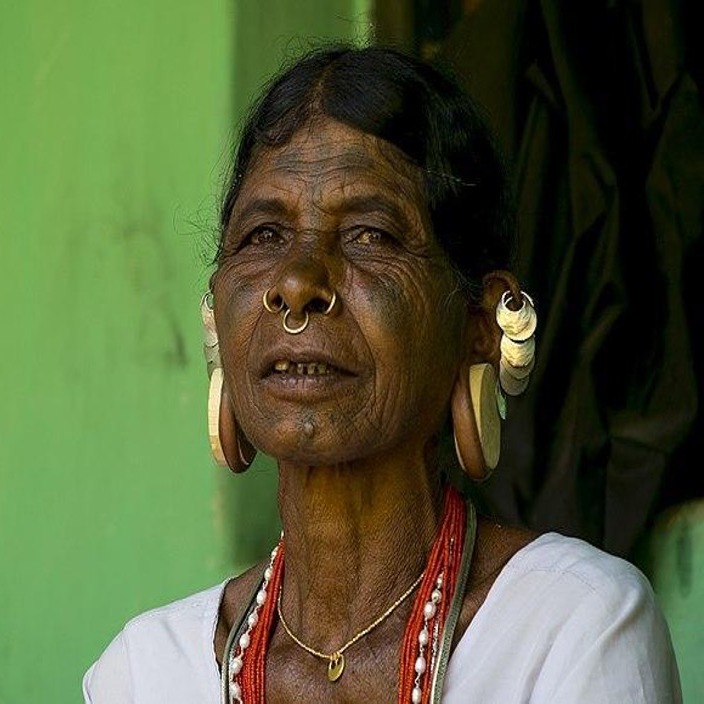
Breakfast. Day dedicated to an excursion to visit the Bonda and Gadabbas and visit of the tribal market of Onukudelli where the members of the tribes meet weekly for bargaining and exchanges, and where it is possible to admire the Bonda women and Gadabbas with their traditional costumes. Nature has showered its bounty on the undivided Koraput district replete with meadows, forests, waterfalls, terraced valleys and darting springs. This land of abundance is home to Odisha’s vast tribal population. A real paradise for the nature-lover, Jeypore offers an additional benefit to the visitor of firsthand meeting with its ancient civilization. They can only be seen when they come to trade at the local weekly Thursday market. The Bonda women are noticeable by the chunks of beaded necklaces that cover their upper body, striking brass and silver necklace and their shaved heads decorated with colourful beads.
In Bonda society, the women enjoy a privileged position. They are the primary workers and providers of food for the community. Bonda girls largely marry boys who are at least five to ten years younger than them. Thus, the girl looks after her husband as he grows up and in turn he cares for his elder wife. In contrast with many other populations in India, the number of women among the Bondas greatly exceeds the number of men.
Visit another ethnic tribal group of the Gadabbas . Both men and women tie their long hairs with linseed oil and decorate it with forestry flowers and different ornaments. The women wear a long strip of cloth tied around the waist and a second piece of cloth is worn across the breasts and tied over one shoulder.
Overnight at Hotel-Semiliguda
Day 10 : Semiliguda-Kotpad-Jagdalpur -165 kms / 4 hrs -Must be a Friday
After breakfast drive to Jagdalpur en-route visit Kunduli -the largest weekly tribal market of Paraja and Mali tribes , Kotpad village interaction with the indigenous Mirgan weavers community.
The Parajas are divided into different sub-groups viz., Sodia, Jadia and Parenga; each of them seems to be a separate ethnic group. The Parajas have a number of totemistic septs like Bagh-tiger, Bokda-goat, Netam-Dog, Pandki-Dove, and the like, and harming or eating the totem animal is forbidden. Instead such animals should be respected. They also worship various gods and goddesses residing in hills or forest
Visit of Kotpad weaving village with soft walk
Visit Kotpad weaving village and interact with the local community. The Kotpad weavers, also called ‘Mirgan,’ make saris, gamchas and tuvals. Kotpad Handloom is a vegetable Dyed Fabric woven by the tribal weavers of Kotapad The characteristics of natural dye colouring is derived from the AUL or madder dye extracted from the root of the Indian Madder tree. Since, it is prepared out of natural resources which are non-toxic and hence non-harmful to the skin. Even though it is only a limited colour range, it is eco-friendly and shades developed are very suiting and pleasant. The powerful and vibrant colours ranging from deep maroon to dark brown depend on the age of the root bark and the proportion of the dye used and is obtained with the addition of harikari or sulphate of iron. These colors combined with the natural unbleached off white colour of the yarn produce dramatic results. The fabric developed are very tedious and time-consuming process reflecting the rich cultural heritage of the tribal’s of Orissa, the motifs used on the fabric that is crab, fish, conch boat, axes, fan, bow, temple also reflect the cross cultural linkage of the area.
Later proceed to Jagdalpur en-route visit Nagernar weekly tribal market of Dhurva and local Adivasi tribes .
~Welcome to Chhattisgarh ~
In the heart of the country, lies cocooned the sylvan state of Chhattisgarh. Blessed with profusely lush forests, gurgling springs and waterfalls, mysterious caves and unusual rock formations, it is home to several culturally rich tribal societies and unique communities. Their long and close association with Nature has culminated in a craft heritage that is inspiring in all its elements. Raipur found itself catapulted to fame as the capital of the new-born state of Chhattisgarh in November 2000. Travelling from Jagdalpur in Chhattisgarh you will be immersed in natural beauty, old temples, and tribal culture.
Late afternoon/evening visit Jagdalpur town -Jagdalpur is a city located in Chattisgarh known for its rich tribal culture and handicrafts. The city is home to several tribal communities, including the Gonds, Maria, and Muria tribes. These communities are known for their unique traditions, handicrafts, and cultural practices. Jagdalpur is surrounded by lush green forests, hills, and waterfalls, making it a popular tourist destination.
Overnight at Hotel – Jagdalpur
Day 11 : Jagdalpur
After breakfast proceed in the morning explore the tribal villages at Nayennar of Bison Horn Mria .
Also visit the Bison Horn Marias – Primarily found in the Bastar region of Chhattisgarh, the Bison Horn Maria s tribes are another major sub-castes of the Gonds. They practice shifting cultivation method of agriculture and collect forest produce for survival. Pointed wood pieces are used for piercing for cultivation and stone implements are used for harvesting produce. They derive their name from Bison Horn and very much adorn the bison horns during their dancing rituals. The Bison Horn Maria are known for their love of landa, a rice beer. Landa is drunk at all festivals and special occasions. Witness their traditional dance and interact with the tribal community- subject to local situation.
Memory Pillars “Gudi
The Pyramids of Egypt draw attention to the whole world, are included in the eight wonders of the world. But Bastar also has little less wonders. There is a similar tradition here, in which the memorial of the family is made after the death. Even if it is not as grand as Egypt, but it is definitely unique. This tradition is known as the deceased pillar. The custom of making dead pillars in Maria and Muria tribe in South Bastar is more prevalent. They are called “Gudi” in the local language. In ancient times, where the ancestors were buried in the tribes, a wide and sharp stone was placed 6 to 7 feet high. The stones were brought away from the hill and other people in the village used to help in bringing them.
Explore the region of Jagdalpur .
Afternoon Visit the weekly tribal market at Mardum of Maria,Gond and Bhatra tribes.
The capital of the Bastar region – Jagdalpur – is an ideal base for exploring tribal Chhattisgarh. The town itself hosts a haat (market) every Sunday where you’ll see Adivasis (tribal people) buying, selling and bartering a longside town traders.
These haats have very important place in their life, where villa gers come from the miles away to buy the household items, vegetables, clothes, home-made liquor etc, to meet the friends and relatives and to watch the cockfights. The vibrant colours of tribal life is easily visible in the make-shifts tents of these haats.
We will also visit the Chitrakote Falls – are on the Indravati River, are the widest in India and are truly spectacular during and after the monsoon. 96ft high, they are often compared by locals, with Niagara Falls but this should not be used as a comparison and an ancient temple .
Narayanpal temple is well-known for its cultural, historical and spiritual value in the heritage of Bastar. North-western side to Jagdalpur, connected to Chitrakote waterfalls, a village named Narayanpal, is situated on the other bank of river Indravati. This village has an ancient magnificent Vishnu temple that was constructed 1000 years ago and is a beautiful archetype of architecture. The Vishnu Temple is established near the confluence of rivers Indravati and Narangi and it dates back to 11th century. Nearby Vishnu temple, a small village got named as Narayanpur after the establishment of temple, meanwhile, it came to be known as Narayanpal.Contemporary to the Khajuraho Temple of India, Narayanpal temple is the only temple in the whole Bastar di strict where the idol of Lord Vishnu is ingrained. Built by Mumundadevi, the queen of Chindak dynasty, Narayanpal temple has the influence of Chalukya style of architecture.
Overnight at Hotel-Jagdalpur
Day 12 : Jagdalpur departure
After breakfast check out and proceed for a brief visit to witness the Sanjay market of Jagdalpur town and return to hotel for early lunch. (this visit is optional or the guests can have a relaxed morning at the hotel and then after lunch to airport )
After lunch proceed to Maa Danteswari airport ,Jagdalpur – 15 minutes drive for departure with lots of memories to cherish for a life time!
Non-Hindus are not allowed inside Bhubaneswar Lingaraj Temple and to be viewed from an adjoining outside private platform.
Non-Hindus are not allowed inside Puri Lord Jagannath temple and to be seen from outside across the main street.
The month of November is a high seasonal period for weddings throughout Odisha and accommodations need to be secured in advance
Accommodation at Daringbadi is the best available at the remote tribal area air conditioned room with attached bath and inhouse restaurant facility.
Bhubaneswar Hotel – Check in time 1400 hrs and Check out 1200 hrs
Puri Hotel Check in 1000 hrs and Check out 0900 hrs